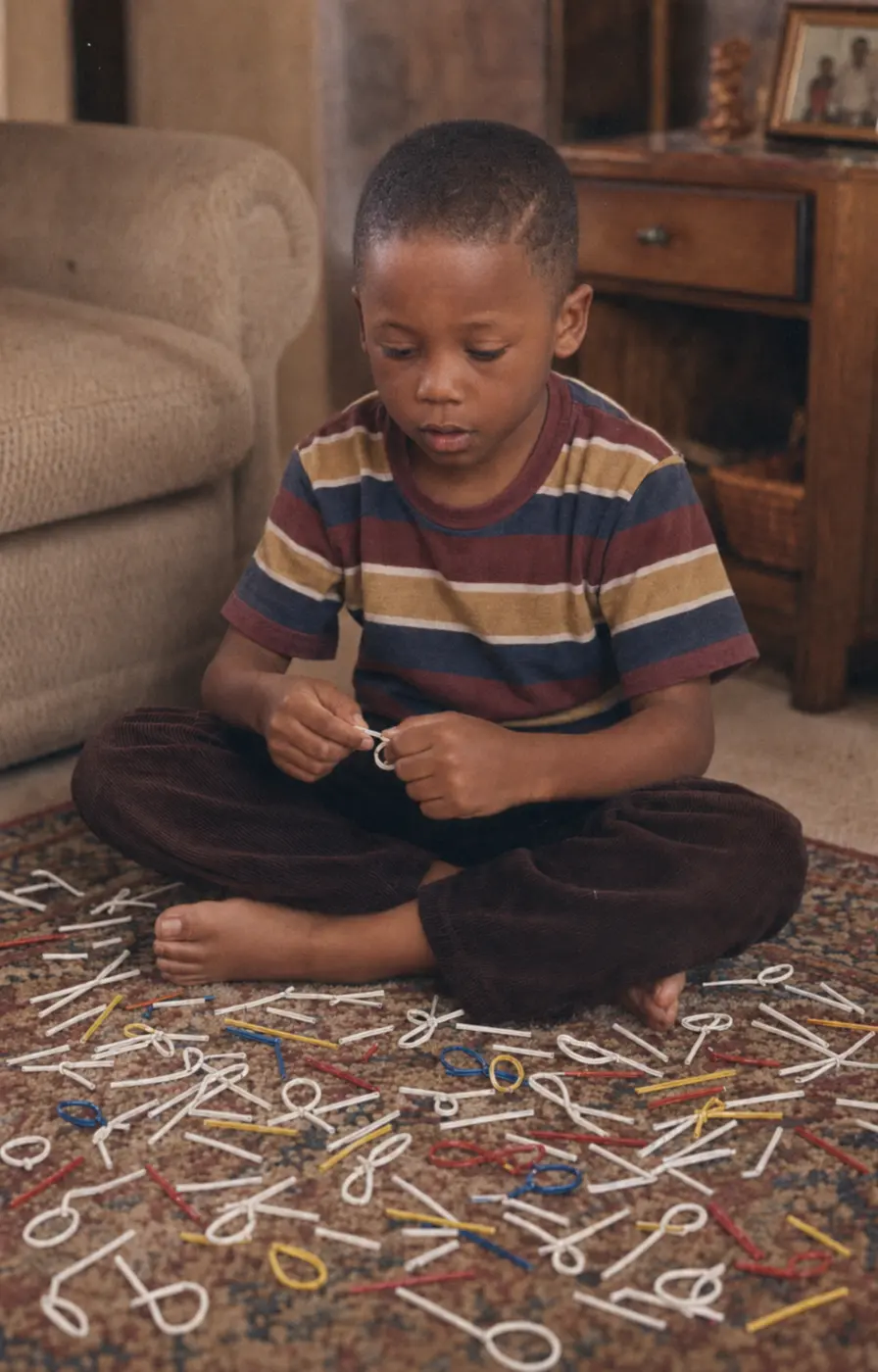
Lonnie Q. Ingram’s relationship with wire began at age six, when he used discarded twist ties to create small forms. What started as childhood curiosity became a lifelong practice—and eventually an original sculptural language he named Lonnetrix.
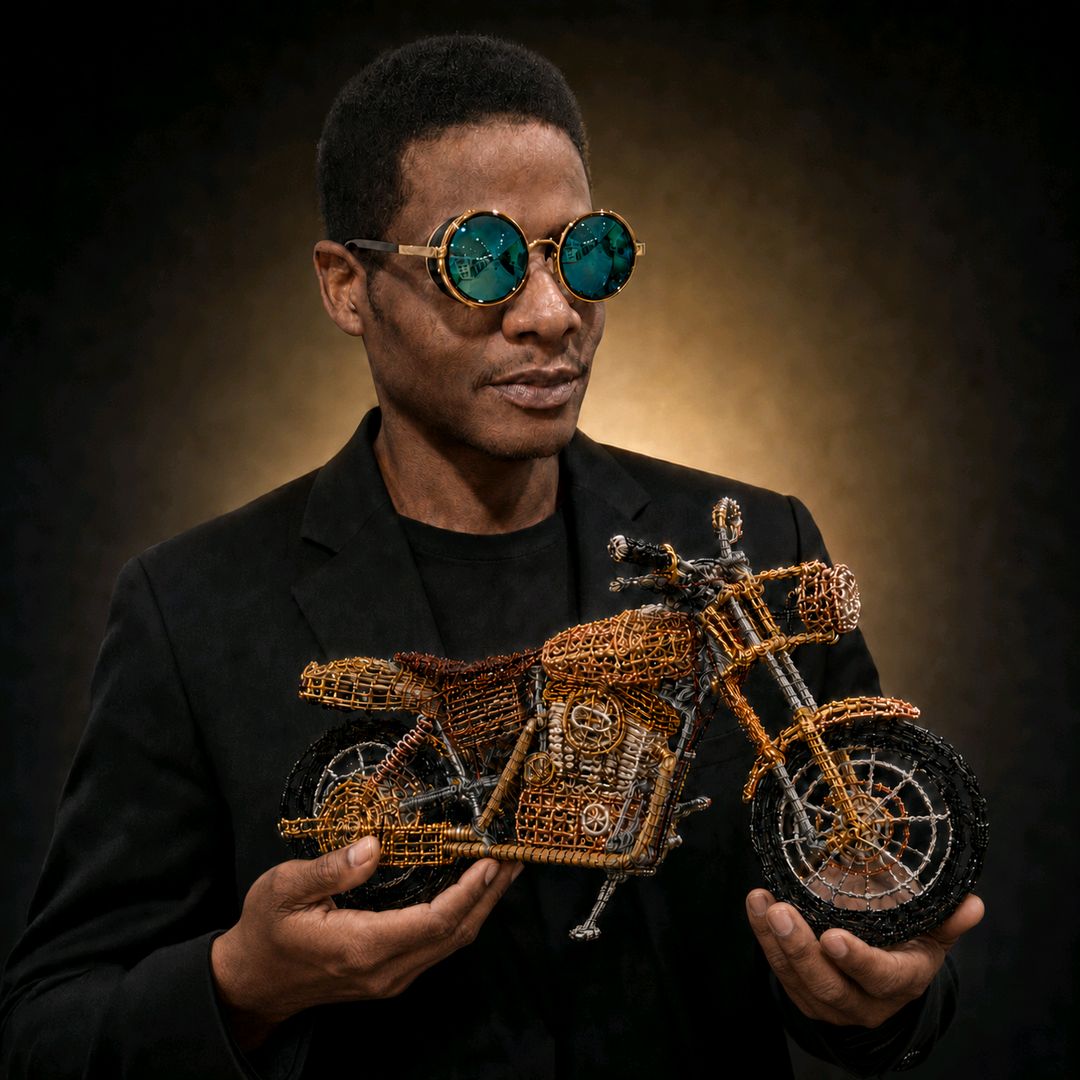
Born in Washington, D.C., Lonnie is a self-taught artist who has refined his practice through decades of experimentation, making, public presentation, and teaching. He moved to Baltimore in 2007 and established Lonnetrix Fine Wire Art there in 2012.
His self-taught geometric weaving process transforms fine coated wire into miniature figures, architecture, machines, landscapes, and narrative scenes. Working without molds, he combines individual and layered strands to create density, movement, texture, and weight.
“While creating, I feel as if I’m drawing in mid-air.”
Lonnie’s practice is inseparable from teaching. Through workshops, festivals, community programs, and Lonnetrix Inc., he shares the patience and possibility of wire art with learners of all ages. His work asks people to look longer, imagine further, and understand that an ordinary material can carry an extraordinary idea.
His body of work ranges from intimate figures and wearable pieces to vehicles, animals, architecture, complex narrative environments, and large-scale public installations. Across every scale, the wire remains visible as both structure and line, allowing viewers to follow the rhythm of the artist’s hand.
Ingram’s work has been presented through galleries, festivals, museums, educational institutions, and media appearances across the United States. His practice brings fine art, public engagement, and arts education together in one continuous mission: to show how creativity can emerge from anything.
Professional profile
Ingram has practiced wire sculpture for more than three decades and works as a sculptor, artistic consultant, designer, teaching artist, and community arts leader. He earned Teaching Artist Certification from the University of the Arts in Philadelphia in 2018. His experience includes gallery exhibitions, juried shows, public art, private collections, commissions, workshops, festivals, and media appearances.
The philosophy behind the practice
Lonnetrix challenges assumptions about ordinary material and self-taught practice. Wire can be line, structure, textile, surface, engineering, and story at once. The work proposes that artistic innovation can begin in childhood experimentation and become culturally significant through sustained discipline, close observation, and service to others.